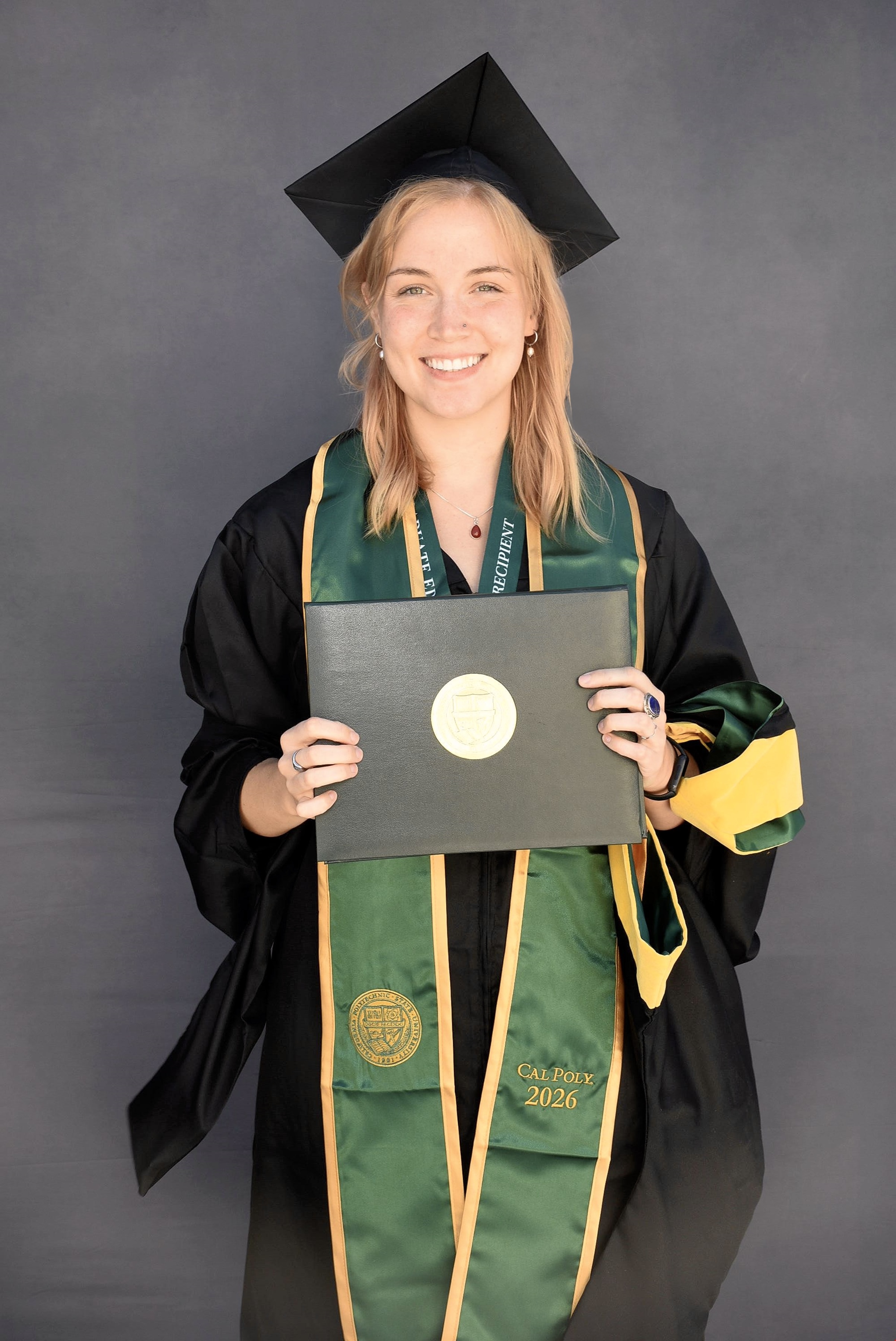
Cal Poly Alumna Gwendolyn Richards on Soil Science, Research, and Finding Her Path
For Gwendolyn Richards, an interest in agriculture turned into a passion for soil science, eventually leading her back to Cal Poly for graduate school. Now, as she wraps up her master's research, Gwen is exploring how regenerative vineyard management can contribute to long-term carbon storage in soil.
Gwen grew up in Auburn, California, and initially thought she might pursue environmental science. After starting her undergraduate degree in agricultural science at Cal Poly, she discovered how much she enjoyed agriculture, particularly soil science. She credits Dr. Charlotte Decock, her advisor during graduate school, with helping her develop that interest and encouraging her to pursue it further.
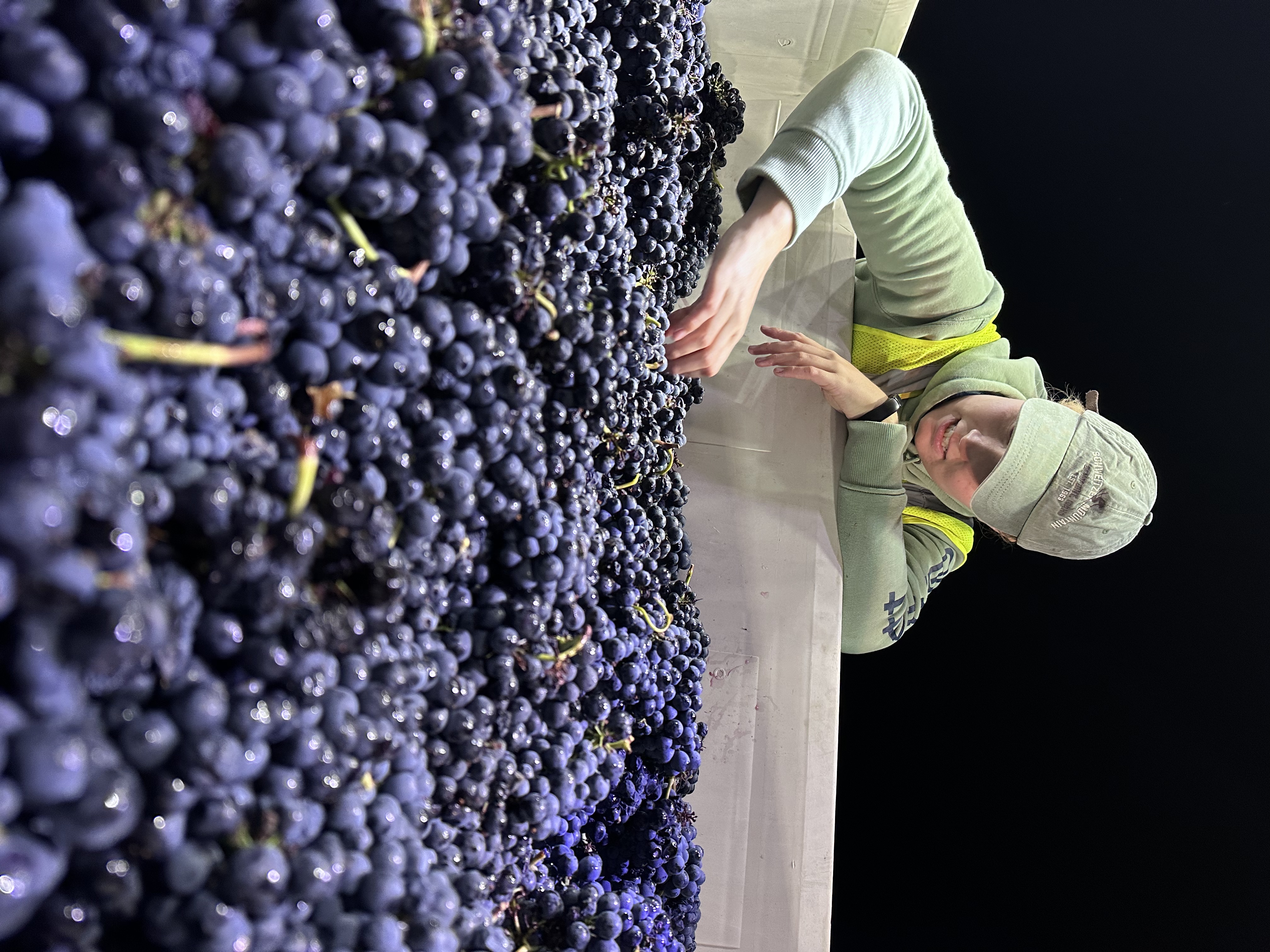
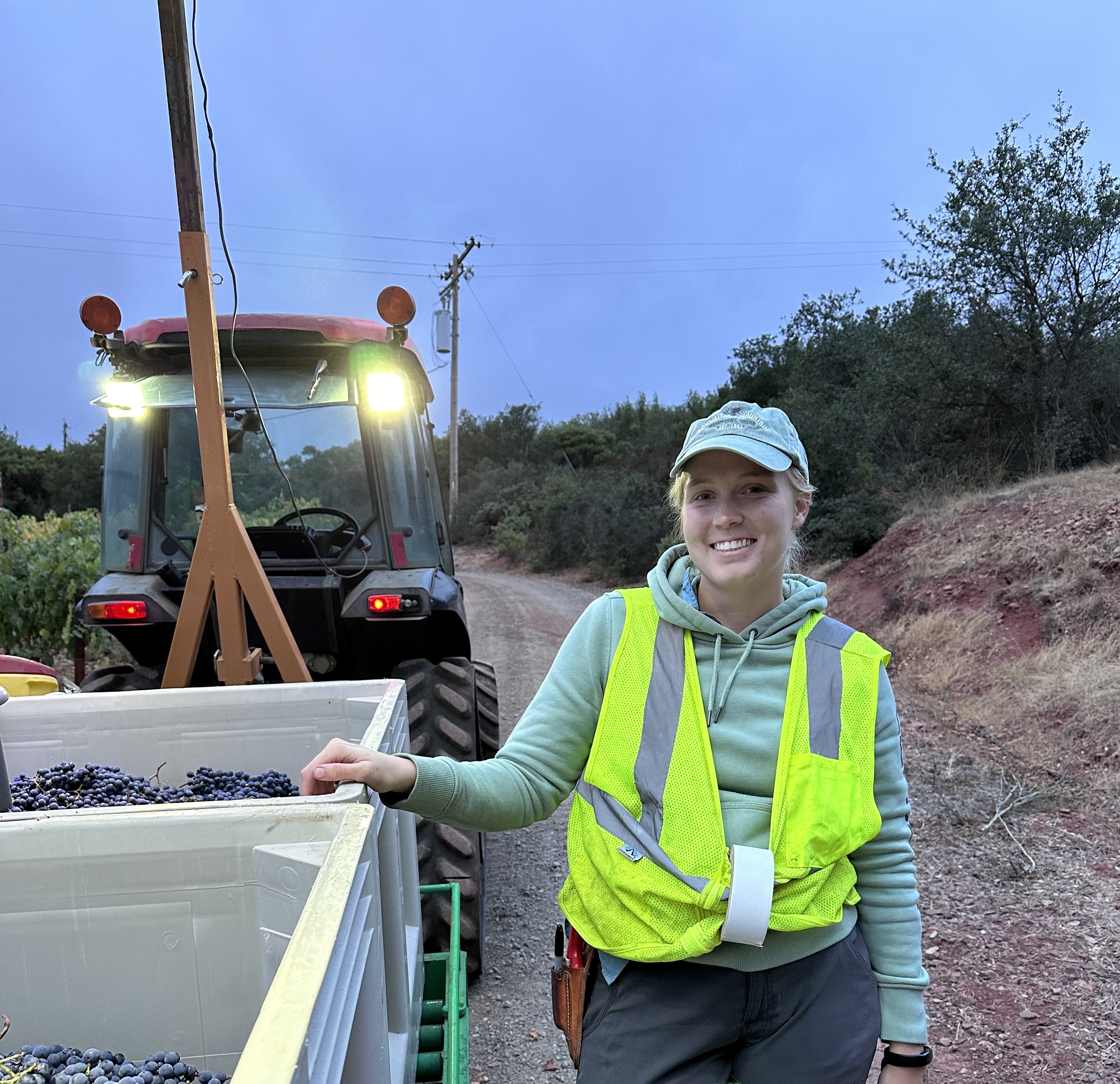
After graduating, Gwen worked as a vineyard scout in Napa and Sonoma. The experience gave her a closer look at the wine industry and helped her realize that she wanted to pursue research more seriously. Watching her supervisor apply her graduate education to work she was passionate about helped Gwen see what might be possible with a master's degree of her own.
Understanding long-term carbon storage
Gwen’s master’s thesis, “Assessing Carbon Storage Potential of Regenerative Vineyard Management,” focuses on how carbon accumulates and remains stored in soil over time.
While soil organic carbon is a common measurement used by growers, Gwen's research focuses specifically on mineral-associated organic carbon. This type of carbon is physically bound to minerals in the soil and can remain stored for long periods.
Working with vineyards across California that have practiced regenerative management for 20 to 30 years or more, Gwen is investigating the conditions that support long-term carbon storage.
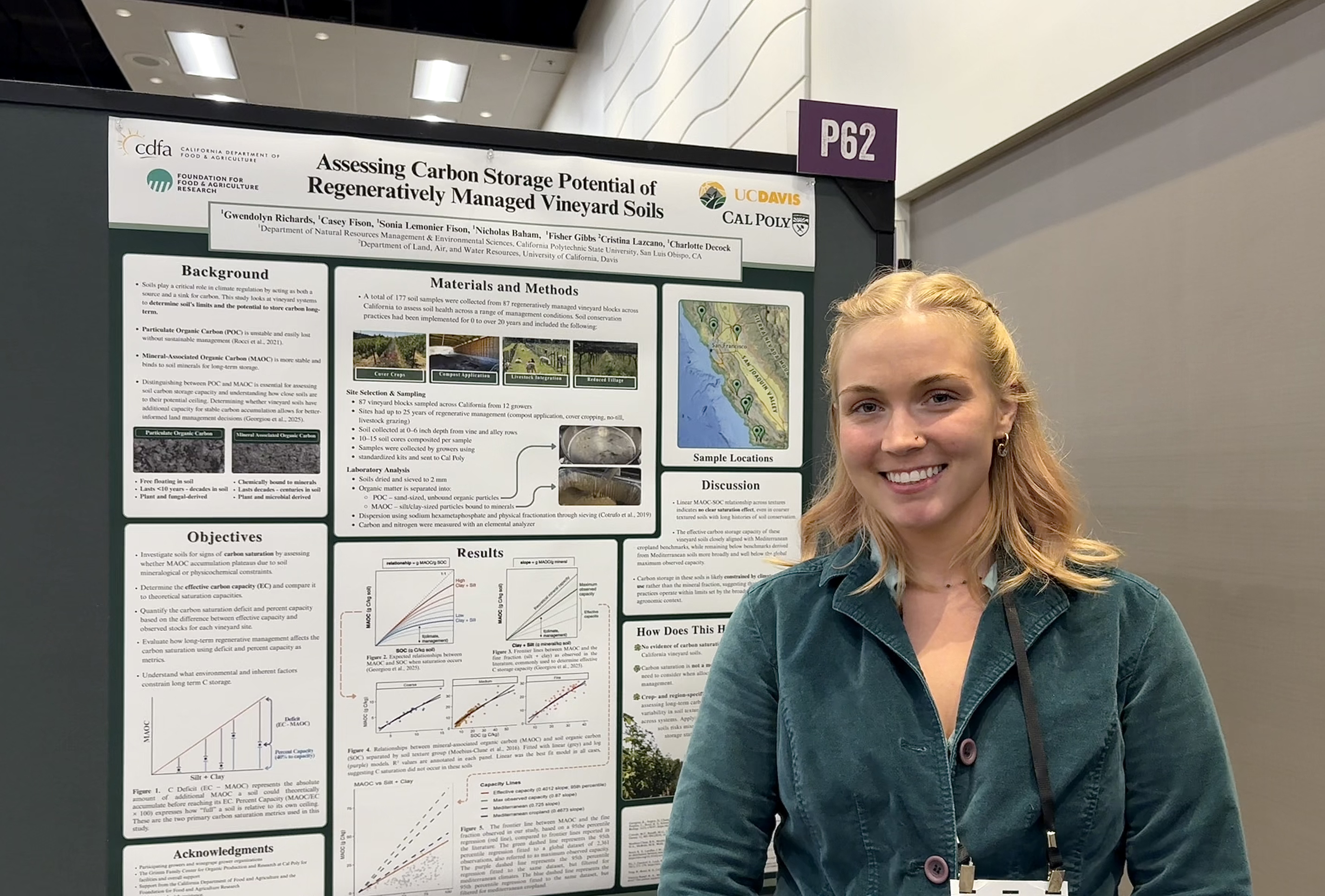
The research is particularly relevant as interest in carbon sequestration and carbon credits continues to grow. Measuring the total amount of carbon in soil doesn’t necessarily tell us how much will remain there over time. Gwen’s work aims to help researchers better understand that distinction and explore ways to measure long-term carbon storage.
For Gwen, the questions that remain unanswered are part of what makes soil science exciting. She sees plenty of opportunities for discovery, creative problem-solving, and a better understanding of how agricultural management affects soil.
Learning through challenges and community
Graduate school has also challenged Gwen in ways she didn’t anticipate. One of her biggest hurdles was statistics, a subject she had never formally studied before starting her research.
The center’s director, Dr. Matthew Grieshop, recognized that she needed help and walked her through the basics, sharing resources that helped her move forward.
Gwen credits experiences like this, along with the support of her lab community, with shaping her graduate experience. She remembers one morning when a scheduling mistake meant she had to be in the lab at 3 AM. As other lab members arrived throughout the morning, they helped her work through the situation and encouraged her.
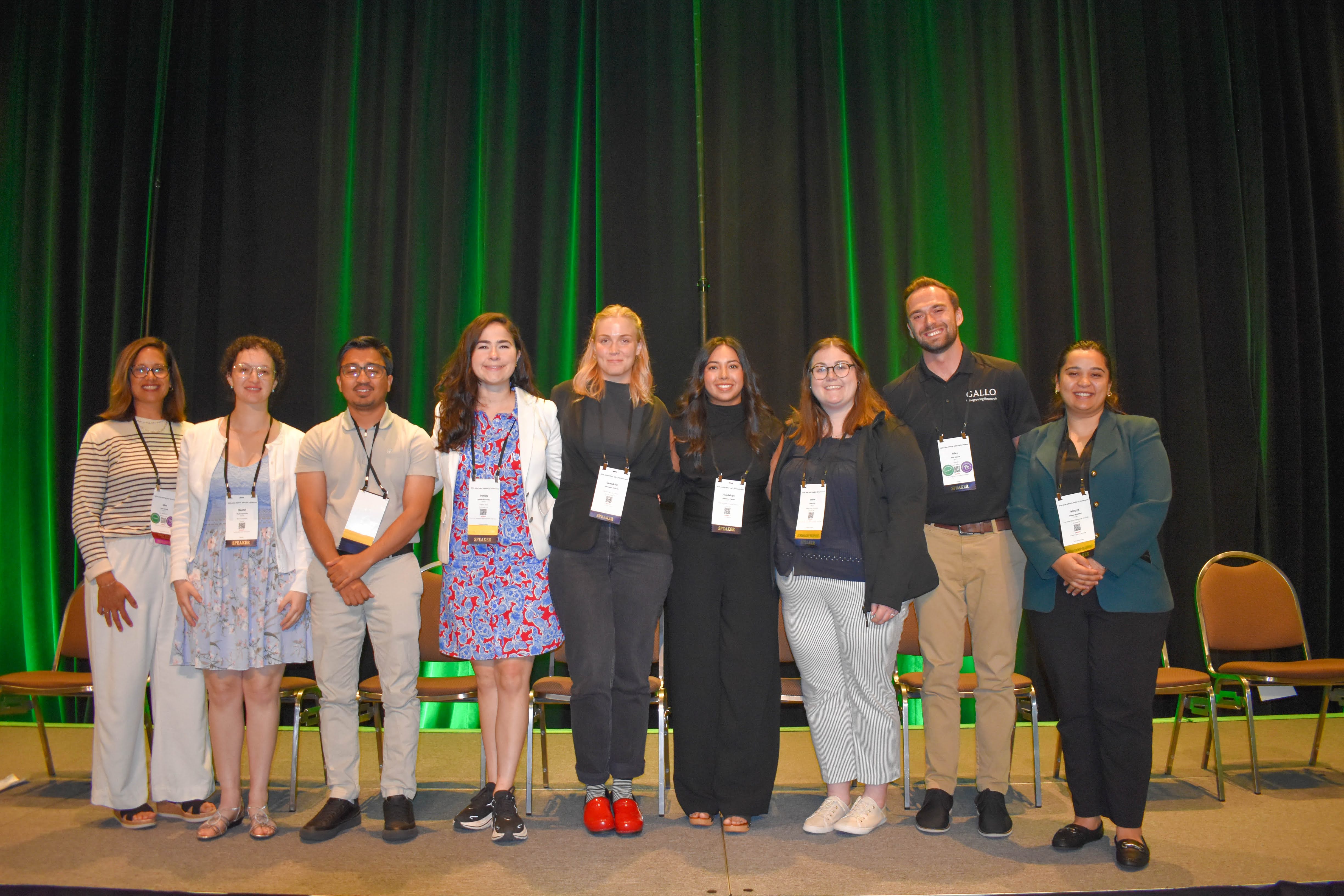
Having people around her who were invested in their own research and willing to support one another made a lasting impression.
These experiences also changed how Gwen thinks about criticism and mistakes. Rather than seeing corrections as a sign that she’s doing something wrong, she has learned to view them as part of the learning process.
“If everything is easy, I’m not being challenged. I’m not growing from it,” she said.
When asked to describe her graduate experience in one word, Gwen chose “growth,” specifically personal growth.
Finding the right path forward
Gwen is currently wrapping up the written portion of her research and preparing to publish with Dr. Decock. She’s also exploring research positions and considering a Ph.D., including working with a professor at another university on a proposal for National Science Foundation funding.
Although she isn’t certain what her next step will be, she knows she wants to continue working in research, particularly in soil carbon. She’s interested in opportunities both within and outside academia, including government-funded projects and organizations working to better understand carbon dynamics.
Her advice to students considering graduate school is to understand why they’re pursuing it. For Gwen, taking time to work between her undergraduate and graduate degrees helped her decide what she wanted to do and why further education made sense for her.
She encourages students to pursue graduate school because they’re genuinely interested in learning and excited about their work, rather than simply treating another degree as a résumé requirement.
Gwen also sees agriculture as a field with many different ways to gain knowledge, from family and community to hands-on experience and formal education. That variety is part of what makes the industry so interesting to her.
She is particularly passionate about sustainable and organic agriculture, while recognizing that farming practices don’t always fit neatly into categories. Farmers work with different resources, priorities and growing conditions, and many continually experiment to find what works best for their land.
As Gwen looks toward her next opportunity, she hopes to keep exploring the questions that first drew her to soil science. Whether her next step is a Ph.D. or another research role, she’s excited by how much there is still to learn about soil and its role in agriculture.